
To implement Conversational Storytelling Interviewing (CSI) for your dissertation based on the framework developed by David Boje and Grace Ann Rosile, you must adopt an "indirect" method of interviewing that shifts your role from a passive bystander to an active co-creator of findings. Instead of relying on traditional, rigid structured or semi-structured question lists, CSI treats interviewing as a collaborative, evolving dialogue that uncovers authentic, living stories. [1, 2]The core action steps to execute this methodology in your dissertation research include:1. Ditch Structured Questionnaires
- Avoid predetermined question paths that restrict or overwrite the natural flow of the respondent's narrative.
- Initiate open-ended dialogue centered around broad experiential themes rather than strict prompts.
- Allow the participant to direct the flow and focus of their own story without investigator-imposed constraints. [1, 2]
2. Practice "Indirect" Interviewing
- Listen for living stories unfolding spontaneously within regular conversation, a tactic historically rooted in the Hawthorne Studies.
- Embed yourself in the narrative exchange rather than interrogating the subject from an detached distance.
- Prompt naturally with conversational cues that encourage the speaker to elaborate on their unique experiences. [1, 3, 4]
3. Implement the AID Process (Self-Correcting Induction)
- Utilize Abduction to form creative, tentative hypotheses based on surprising or unique storytelling moments.
- Apply Induction to gather broader conversational evidence and recognize evolving narrative patterns across your data.
- Employ Deduction to test your narrative findings against existing organizational, feminist, or indigenous theoretical frameworks. [1, 3]
4. Co-Create the Research Findings
- Acknowledge your own influence as an active participant whose dialogue helps shape the storytelling environment. [1]
- Reconstruct the narrative collaboratively with the participant to ensure their voice remains authentic and is not overwritten by academic jargon. [2]
- Use multi-bystander accounts from colleagues, family, or friends to reconstruct a complete narrative if the primary subject cannot fully share their story directly. [5]
5. Transition Conversation into Storytelling Science
- Analyze the socio-political context of the story, making it an ideal approach for critical fields like management, feminist, and indigenous studies. [1]
- Engage with the iterative process outlined in the text, utilizing the book's specific practice exercises to train yourself in advanced inquiry before entering the field. [1, 3]
If you want to tailor this framework to your specific study, let me know:
- What is the academic discipline or topic of your dissertation?
- Who is your target participant group?
- Are there any sensitive contexts or constraints (like NDAs or vulnerable populations) involved in your research?
Revolutionizing How We
Understand Storytelling and Change in Organizations
🔥 "David Boje’s storytelling
imagination burns with the fierce energy of a volcano,
generating more insights in a few pages than others
display in whole volumes." –
Yiannis Gabriel, University of Bath, UK
📖 "The brothers James would be delighted with
Boje’s work—James for its weight on narrative, Henry
for its pragmatic approach." – Barbara Czarniawska, University of
Gothenburg, Sweden
🔹 "David Boje is one of the most innovative thought leaders on organizational change and narrative methods."– Nikhilesh Dholakia, University of Rhode Island, USA
🔹 "Boje’s work has powerfully influenced how researchers engage with and understand organizations." – Heather Höpfl, University of Essex, UK
🔹 "He leaves no stone unturned in his profound and gifted way of dissecting and explaining the variety and complexity of storytelling." – Ed Breeding, Painter/Writer/Documentary Filmmaker, USA
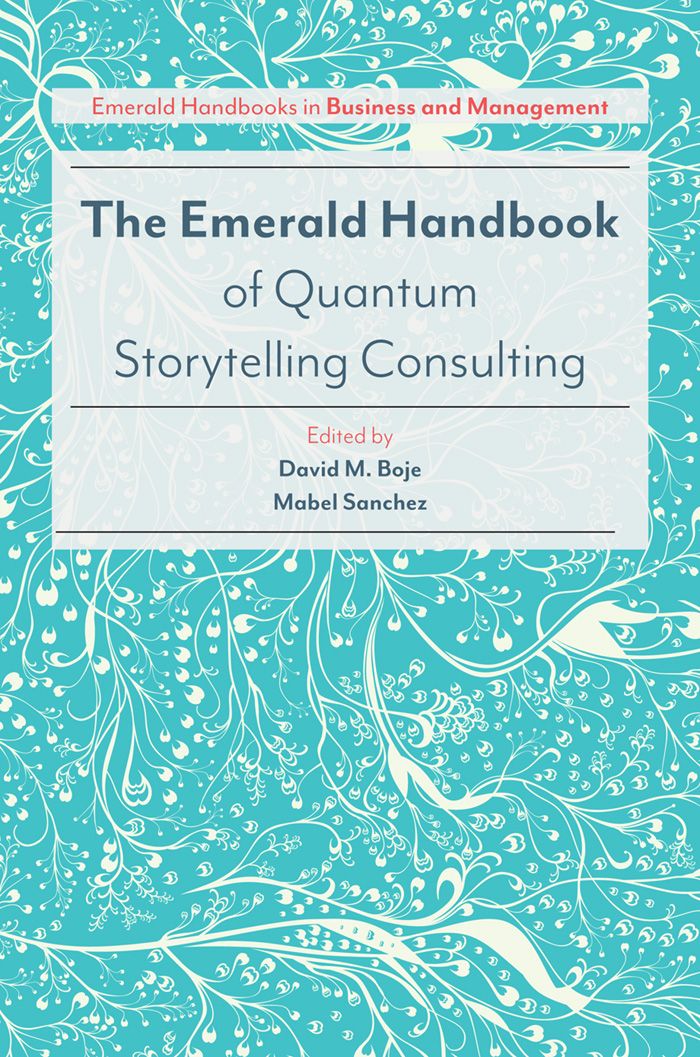

 author of over
45 books and 150 journal articles. Keynote speaker at
conferences around the world.
author of over
45 books and 150 journal articles. Keynote speaker at
conferences around the world.
Contact Dr. David Boje – david@davidboje.com | (575) 936-9578

- Embodied
Restorying Process (ERP): Steps
to help you rewrite your personal stories.
- Antenarrative
Processes: Techniques to
uncover hidden patterns in your narratives.
- True
Storytelling Principles: Guidelines
to ensure your stories are authentic and impactful
· "Ready
to transform your story? Join our next workshop or
connect with a coach to begin your journey."
Contact Information: "Contact
us at davidboje@gmail.com for
more details."
777
Framework Mapping Table
|
7
Antenarrative B-Processes |
7 True
Storytelling Principles |
|
Beneath –
Unconscious story filters and projections. |
Truth –
You must be true and prepare the energy
and effort for a sustainable future. |
|
Before –
The origins of subconscious story filters. |
Make
Room – True
storytelling makes spaces respecting the
stories already there. |
|
Bets –
Choosing future possibilities with
uncertainty. |
Plot –
You must create stories with a clear plot,
creating direction and helping people
prioritize. |
|
Being –
Living in the present, interwoven with
past and future. |
Timing –
You must have timing. |
|
Becoming –
Transforming by gathering 'Little Wow
Moments'. |
Help
Stories Along –
You must be able to help stories on their
way and be open to experiment. |
|
Between –
Navigating the four WHO identities. |
Staging –
You must consider staging including
scenography and artifacts. |
|
Beyond –
Moving past limiting narratives to
expansive potential. |
Reflecting –
You must reflect on the stories and how
they create value. |
|
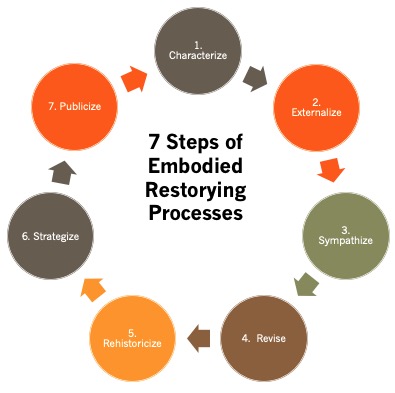
7 Embodied
Restorying Process (ERP) Steps are a
Cycle -Tool That Repeats in each of the
Processes & Principles Above. Characterize –
Recognize the unconscious patterns shaping
perception and identity. Externalize –
Identify and name the hidden story filters
affecting decision-making. Sympathize –
Understand the function these filters have
served in personal history. Revise –
Challenge and modify limiting beliefs and
past assumptions. Strategize –
Find 'Little Wow Moments' as foundations
for a new story. Rehistoricize –
Rewrite past experiences with a broader,
more empowering perspective. Publicize –
Share the new story with a community to
reinforce transformation |
|
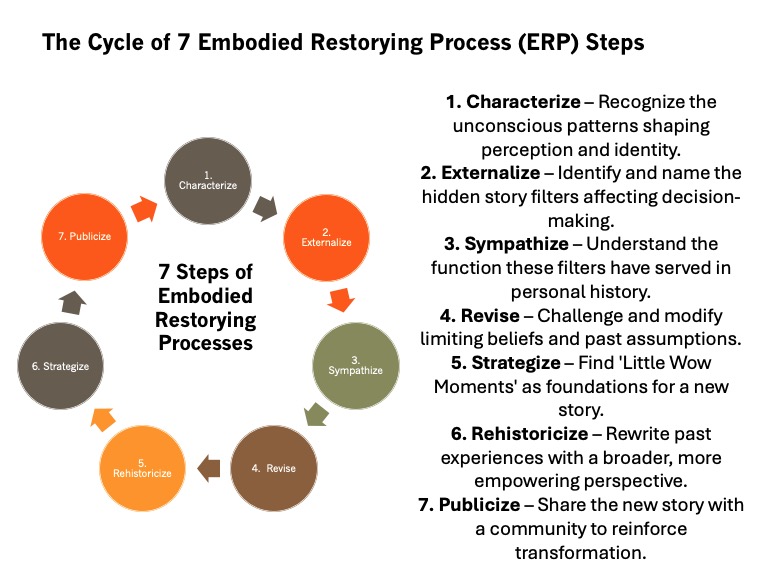
This table visually
represents how the 7 Antenarrative
B-Processes, 7 True Storytelling
Principles, and 7 ERP Steps interconnect.
Each ERP Step acts as a bridge
between the B-Process and the True Storytelling
Principle, reinforcing the self-correcting cycle.
David
Boje, Grace Ann Rosile and Elior the Poet of
Entrpreneuring.
What Participants Say:
💬 "David Boje’s it was great seeing someone again who had an influence on my life!" — Don Johnson, Author of Would You Like to Swing on a Star” How you can create, prepare, and deliver a winning speech.”

💬 "David successfully grasps how to intertwine storytelling and narratives. His course makes a major impact and brings about positive results through exploring methods and strategies for increasing business." — Jacqueline Cohen-Baity author of an amazing E-recipe book with songs and stories. Author of Adventure of Comical Salesman with International Recipes
💬 " I learned all about serendipity from David
Boje small business consulting class at New Mexico State
University. Serendipity means good fortune and good luck
all by accident. I was suicidal and depressed as a kid
going blind. If someone would have told me paint your
inner visions and one day you would have a Smithsonian
traveling art exhibit colors of the wind and it would
travel all over the country and inspire millions, I would
have said, “what are you crazy? Not me, mi amigo!” and now
colors of the wind is a bestselling children’s book,
currently in production of a CBS doc film about my life
story and most of my paintings have become bestselling
fabrics worldwide. Not
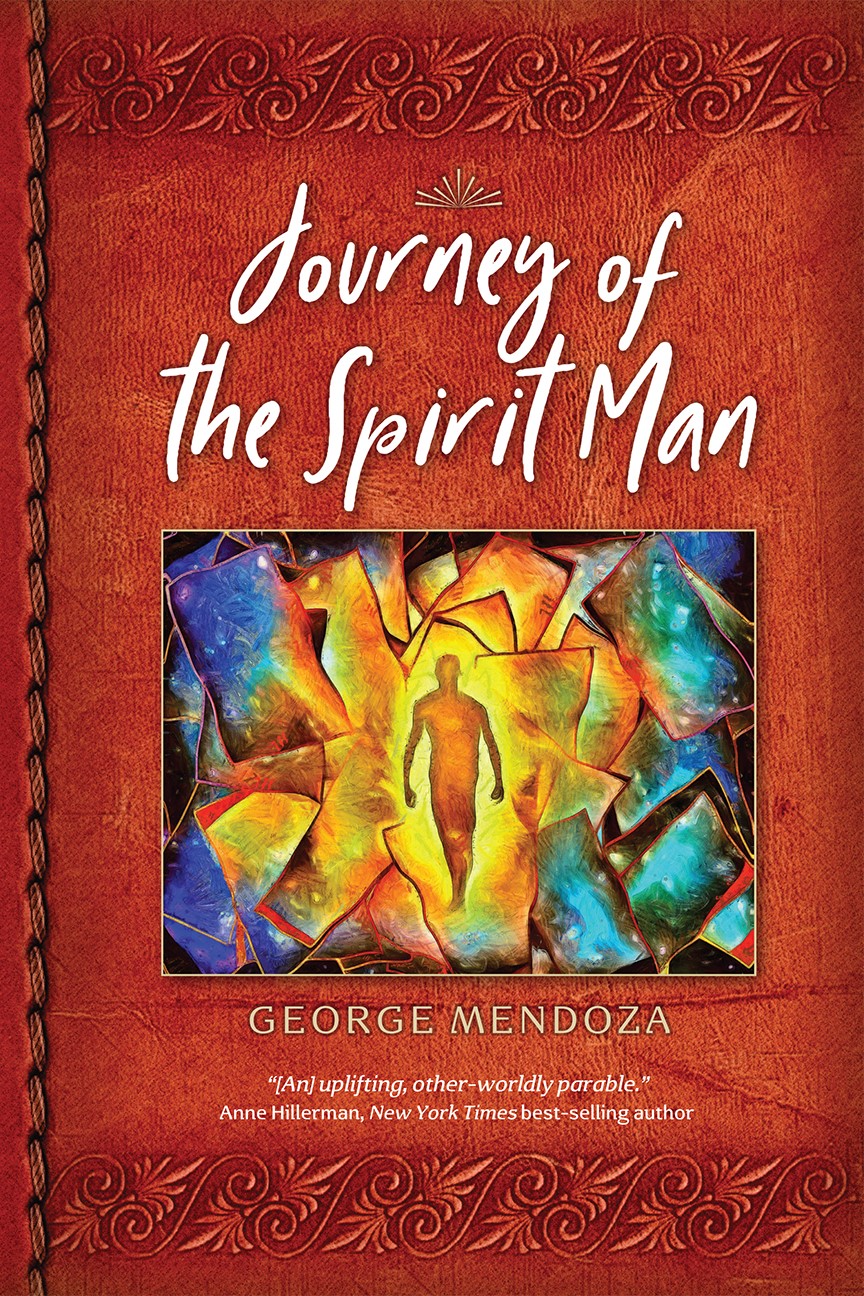
bad for a blind wizard!" — George Mendoza. GeorgeMendoza.com Author of Journey of The
Spirit Man.
💬 "David Boje changed how I think about and practice storytelling. His theories of quantum storytelling will have a profound impact of how organizations operate.— Mike Bonifer Author of Gamechangers" Improvisation for Business in the Networked World.
